

25/09/26
Borders and Crossings 2026: Reflections
Public Engagement Fellow, Ross Cameron, recently attended Borders and Crossings: An Interdisciplinary Conference on Travel Writing at Aix-Marseille University, exploring connections between travel writing studies and The Victorian Hand.

After a three-year hiatus, Borders and Crossings returned this year in collaboration with the Société d’Étude de la Littérature de Voyage du Monde Anglophone (SELVA). Having co-organised the previous edition at the University of Łódź in 2023, I was delighted to attend this interdisciplinary gathering to present my research on James Holman, the self-described ‘blind traveller’, and explore new connections between travel writing studies and The Victorian Hand.
Borders and Crossings is a longstanding conference dedicated to the study of travel writing. As the travel writer Jonathan Raban famously described the genre, it is ‘a notoriously raffish open house’ and the conference embraces this interdisciplinary spirit, bringing together historians, literary scholars, geographers, media specialists, political scientists and researchers from a range of other fields.
The first conference took place in Derry in 1998. Organised by Tim Youngs and Glenn Hooper, the conference was initiated because the study of travel writing lacked a dedicated academic forum, despite growing interest in the genre following Edward Said’s Orientalism. In the year of the Good Friday Agreement, Derry was a particularly fitting location: situated close to the border between Northern Ireland and the Republic of Ireland, and on the oceanic edge of the British Isles, it offered a compelling setting for a conference concerned with travel, borders and cultural exchange.
True to its subject, Borders and Crossings has since become a travelling conference, journeying to locations around the world. The conference has gravitated towards cities with rich histories of travel and tourism, including ports (Liverpool, Belfast, Palermo, Brest and Melbourne) and popular tourist destinations, past and present (Aberystwyth, Pula and Versailles). Other host cities –Veliko Tarnovo, Kielce, Tartu and Łódź – offered fascinating histories of cultural exchange and fluctuating political borders, while Canterbury brought the conference to a historic site of pilgrimage. Aix-en-Provence was a fitting next stop. The city and its surrounding Provençal landscapes have long attracted artists, writers and travellers, making it an ideal setting in which to consider travel writing. One such traveller was the subject of my paper. Holman, visiting in 1819, described the town’s inhabitants as possessing ‘an uncommon urbanity in manners’ due to its prominent law school. However, by contrast to later visitors, he found the town’s network of streets ‘narrow and very dirty’ and he complained that the climate was unfavourable, as the nearby mountains funnelled ‘vents de bise’, the infamous mistral wind, towards the town.
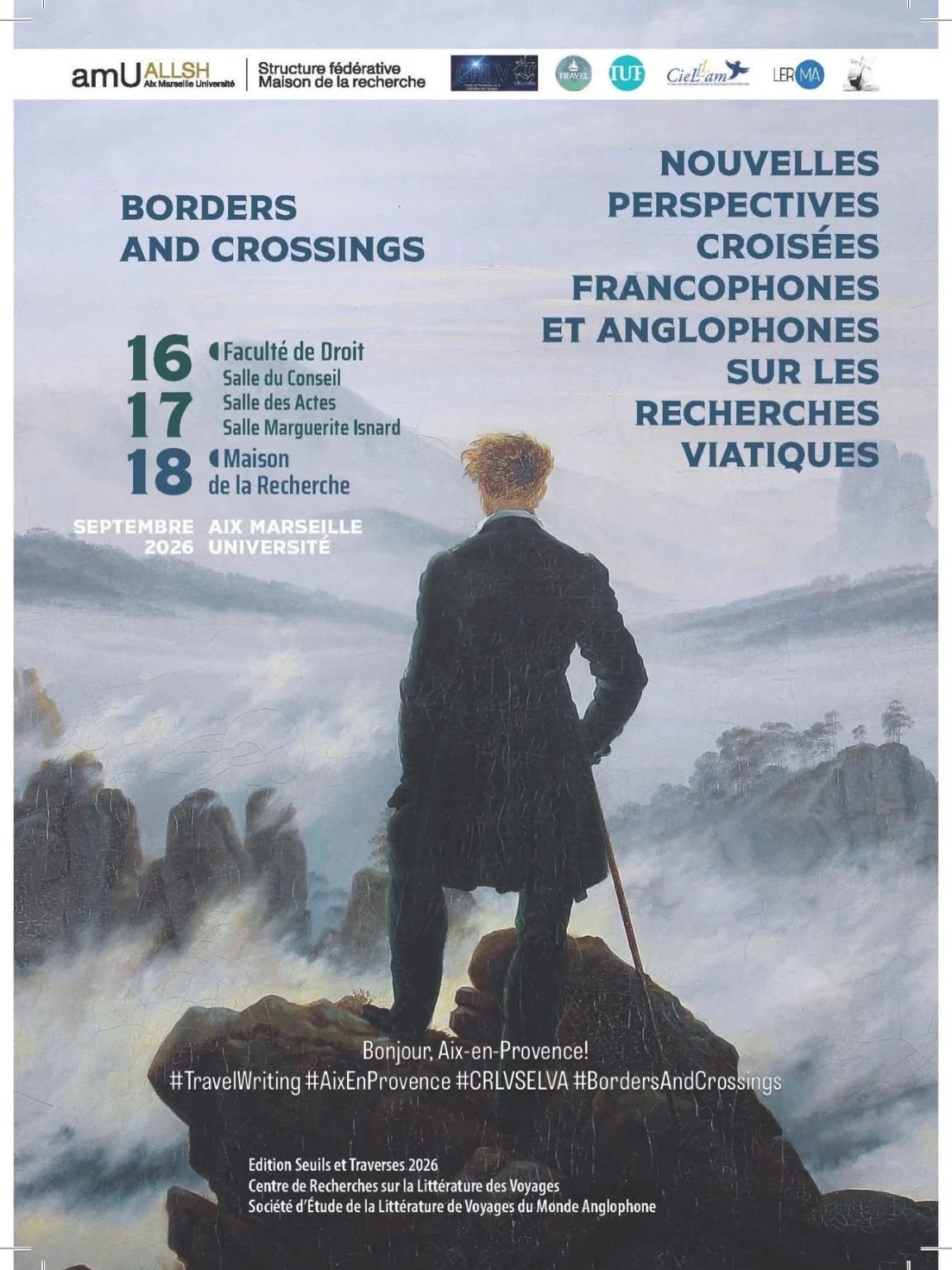
The conference promotional poster featuring Caspar David Friedrich’s Wanderer Above the Sea of Fog (1818) - an image that captures the ‘monarch of all I survey’ position theorised in travel writing studies as linking vision and control.
At this year’s conference, I presented on the panel ‘Travelling and Care: Dealing with Ageing, Disability and Health’. My paper explored the hand as an interface between the self and the world through the writings of Holman, whose experiences as a blind traveller offer important perspectives on the embodied and sensory dimensions of travel and challenge conventional readings of the genre, which emphasise visuality via concepts of ‘the seeing man’ or ‘the monarch of all I survey’. You can read more about my work on Holman here.
The panel provided a productive space to consider how the body mediates our encounters with unfamiliar environments and how these experiences are represented in travel writing. The other papers approached the relationship between travel and embodiment from a range of perspectives. Guillaume Linte (Centre National de la Recherche Scientifique) examined representations of dermatological conditions in French colonial travel writing, positioning the skin as a vector of disease that shaped relations between different groups in colonial society. Linte’s work highlighted the tensions between touch and travel: while touch connected Holman to the world, colonial travel writing cast it as a potential source of disease and death in ‘the torrid zone’. Drawing on Susan Sontag, Christelle Klein-Scholz (Aix-Marseille University) considered how travel in AIDS literature operates metaphorically, evoking the exploration of ‘new biological and physical terrain’. Bringing these discussions together, Charles Forsdick (University of Cambridge) reflected on ageing and travel writing, reminding us of the profoundly bodily nature of the genre as well as its mnemonic quality, through which older travellers reflected on journeys undertaken in their youth.
Across the panel, discussions foregrounded the sensory and somatic dimensions of travel writing, from the touchscapes of Holman’s voyages around the world to the smellscapes and soundscapes of public transport in the contemporary USA described by one of Forsdick’s elderly travel writers. These conversations resonate strongly with The Victorian Hand’s interest in the ways our senses mediate and record our experiences of the world. They also highlighted the growing interest in the embodied dimensions of travel writing, moving beyond scholarship on the social and cultural construction of travellers and ‘travellees’ that has long been the focus of travel writing studies. These themes extended across other panels, particularly ‘Travelling and the Senses’, in which Florian Deiroo (Vrije Universiteit Brussel) explored heightened sensory experience in modernist travel literature. Indeed, Deiroo’s work complemented my study of Holman, showing how the epistemic limitations of touch-based knowledge in nineteenth century travel writing gave way to greater subjectivism and sensory awareness in twentieth century accounts.
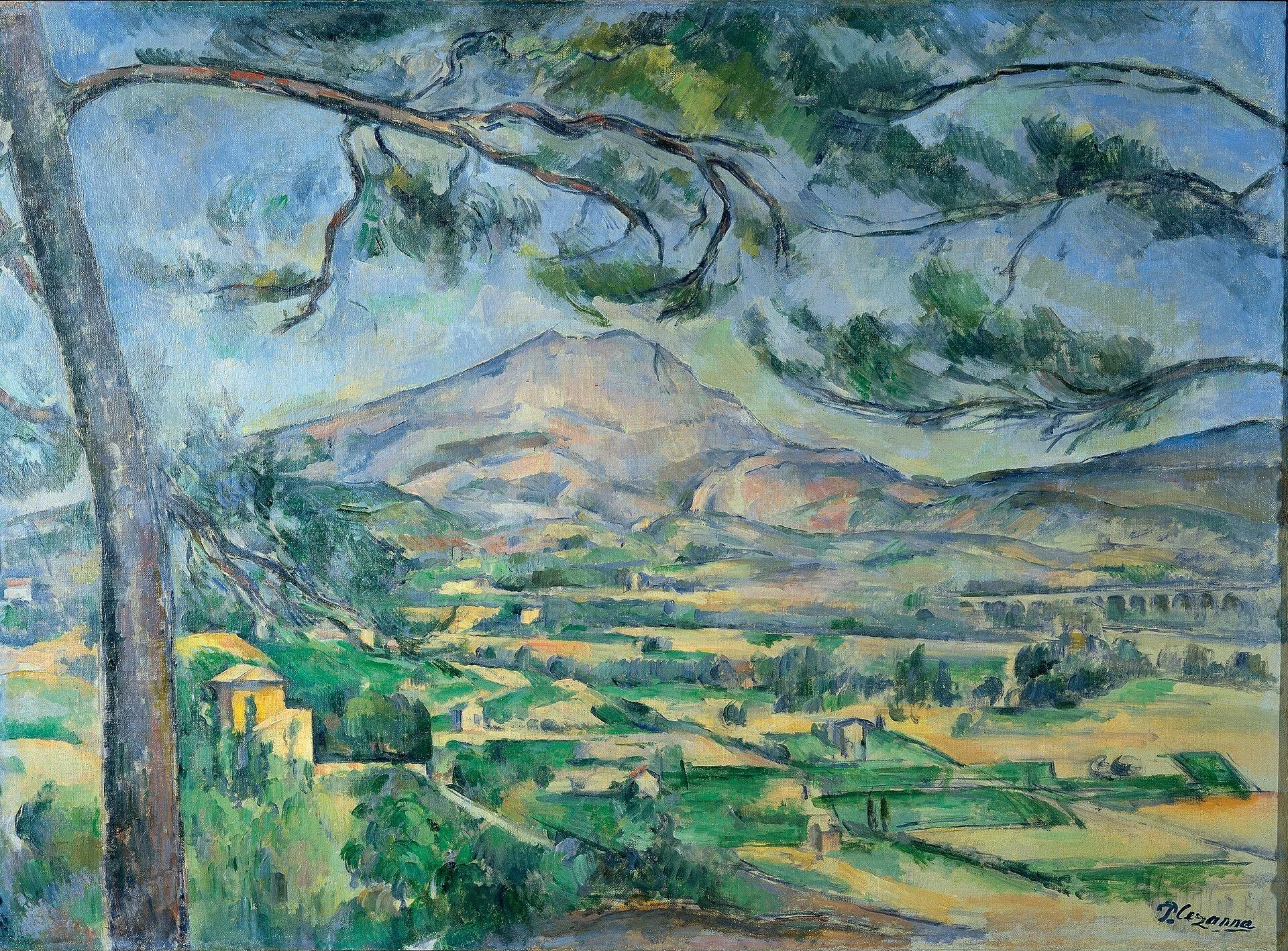
Mont Sainte-Victoire by Cézanne (1887). The landscapes around Aix-en-Provence inspired artists and travellers, making it an ideal location for Borders and Crossings.
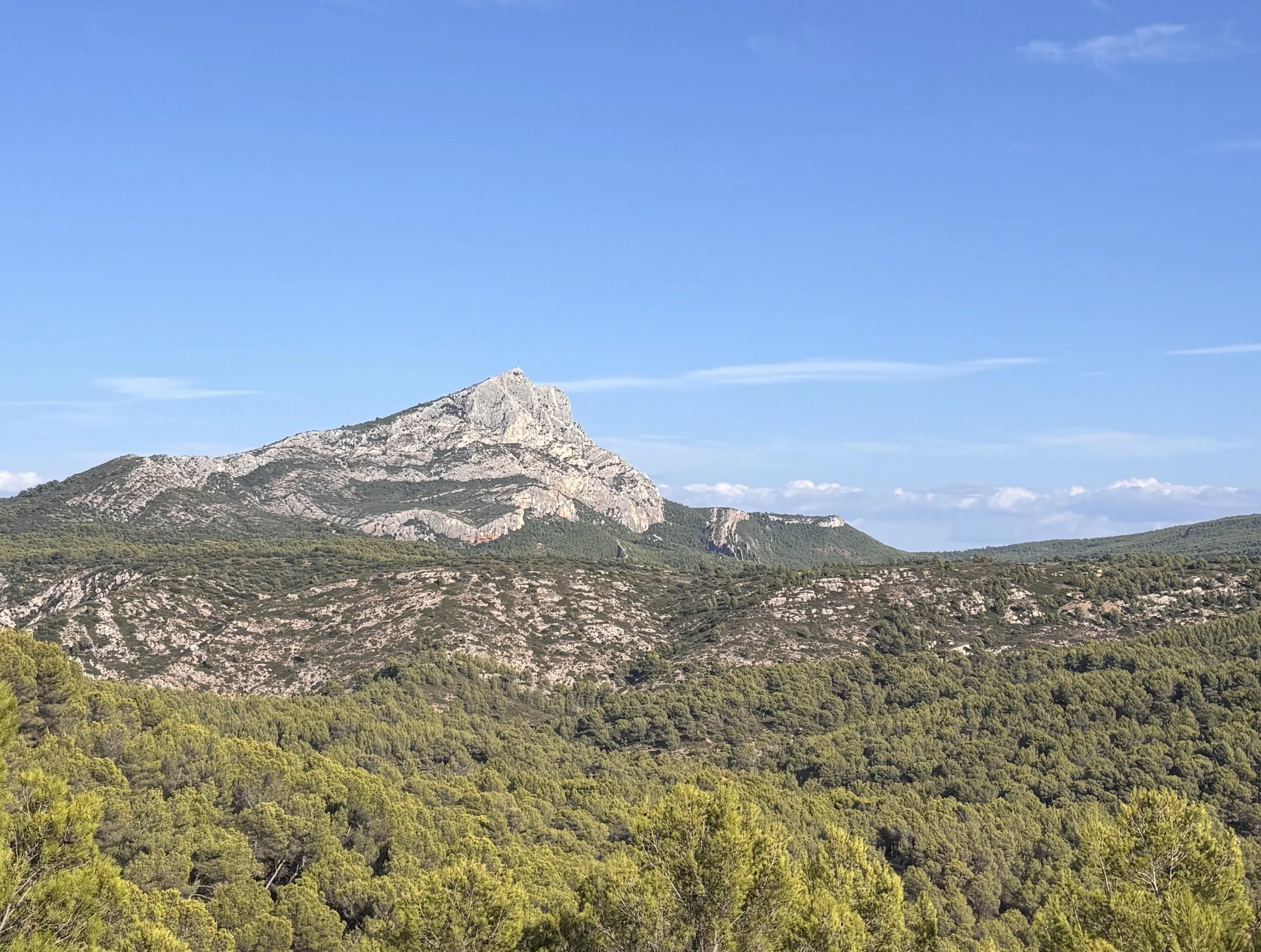
Mont Sainte-Victoire, photographed during an evening run in hills east of Aix-en-Provence.
Ultimately, the 2026 edition of Borders and Crossings offered a valuable opportunity to bring The Victorian Hand into conversation with an interdisciplinary community of researchers. The conference opened up new opportunities to think about the relationship between mobility, sensory experience, ageing and the body – questions that sit at the heart of both travel writing studies and our project’s exploration of embodiment and identity in the Victorian age.
Many thanks to the organisers, Emmanuelle Peraldo and Sylvie Requemora, as well as the wider SELVA network, for bringing Borders and Crossings back together and creating such a generative space for interdisciplinary exchange.