
23/04/26
‘People’s hands have made history’: Surgery, Sewing and Embodied Identity
We hosted the first two of our Work of Mending workshops at The Quilters’ Guild of the British Isles and The Hunterian Museum at The Royal College of Surgeons of England. Ross Cameron, Public Engagement Fellow, reflects on some initial findings from these hands-on sessions.
The first Work of Mending workshop opened with a deceptively simple but radical proposition: identity is not something external or abstract, but something formed through the everyday actions of our hands. As Deborah McGuire, the quilt historian who led this introductory thought experiment put it, ‘we are what we do’. Building on this premise, The Victorian Hand has collaborated with The Quilters’ Guild of the British Isles and the Hunterian Museum at the Royal College of Surgeons of England to investigate how manual practices, from the Victorian period to today’s digital age, have shaped personal and professional identities. While surgery and sewing might appear worlds apart, both are examples of skilled handwork grounded in histories of making, repairing and caring. Alongside surgeons and sewers, the workshops have brought together a diverse group of participants, including midwives, taxidermists, archivists and academics, each contributing their own perspectives on the histories and meanings of the hand.
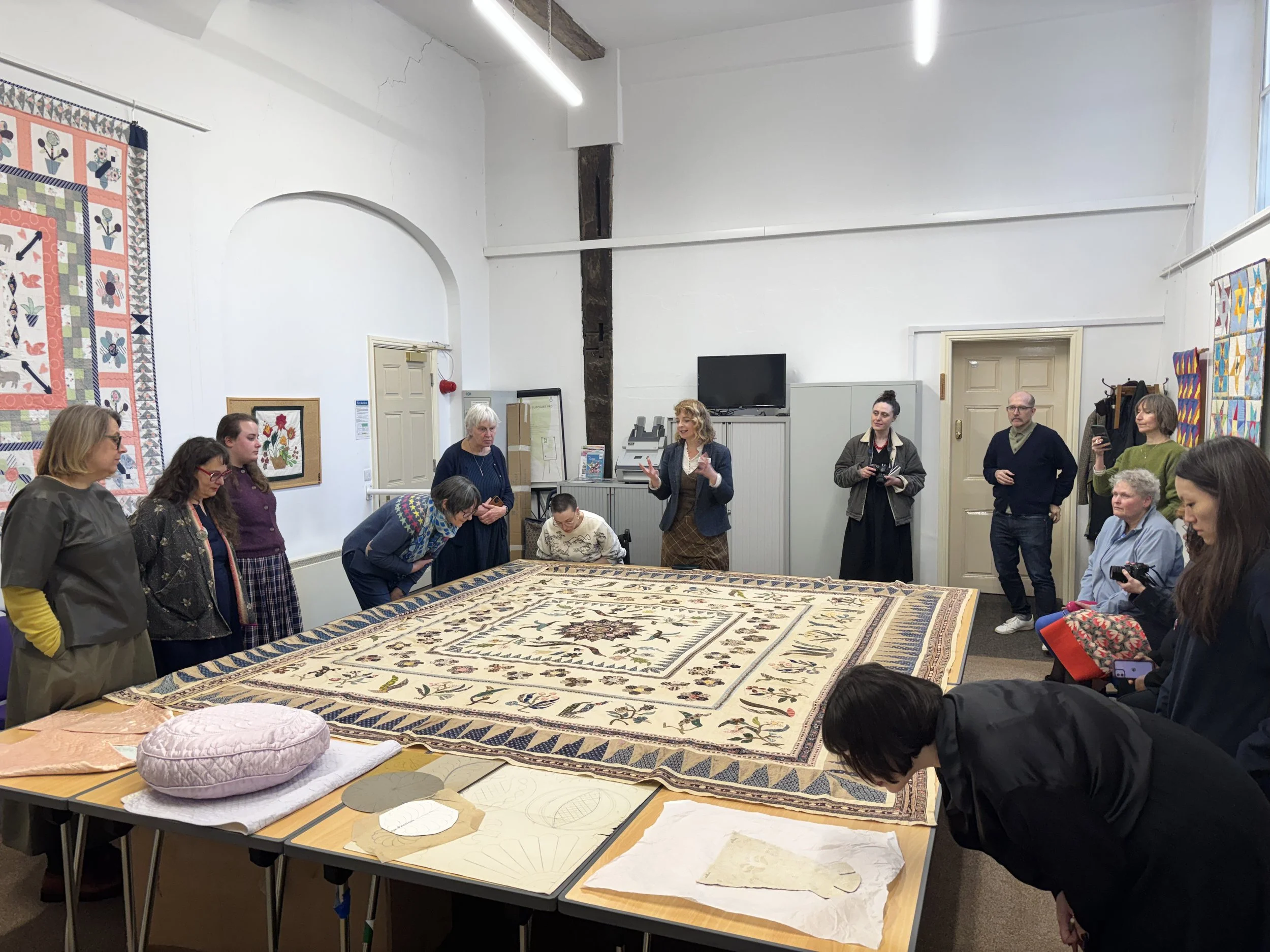
Heather Audin, curator at The Quilters’ Guild, leading discussion on the Gooch coverlet.
The first session, ‘Skilled Hands’, took place at The Quilters’ Guild in York and featured a presentation by curator Heather Audin, who guided us through examples of virtuoso stitchery from the Guild’s collections. Among the works discussed were intricately stitched quilts such as the monumental Gooch coverlet – created by three sisters from the landed gentry – and finely executed North Country quilting by Mary Lough. This close engagement with the collection encouraged reflection on how technical mastery informs identity and why particular forms of stitching have been associated with specific professions, regions, classes and genders. As one participant observed, the session prompted them to ‘think about how long craft has been important and how people’s hands have made history’.
Building on these reflections, The Victorian Hand’s project textile artist, Ruth Singer, led a hands-on making exercise that shifted the focus from observation to embodied practice. We were invited to handle examples of her previous work before creating our own textile sculptures that will contribute to her forthcoming work for The Victorian Hand’s 2027 exhibition. Throughout the process, we were encouraged to consider whether their hands facilitated or frustrated our journey to skill. The resulting sculptures were fashioned from a range of fabrics, including forms made from a deep red cloth that evoked bodily fragments – objects that seemed almost surgically excised, yet shaped through the careful and deliberate handwork of textile craft.
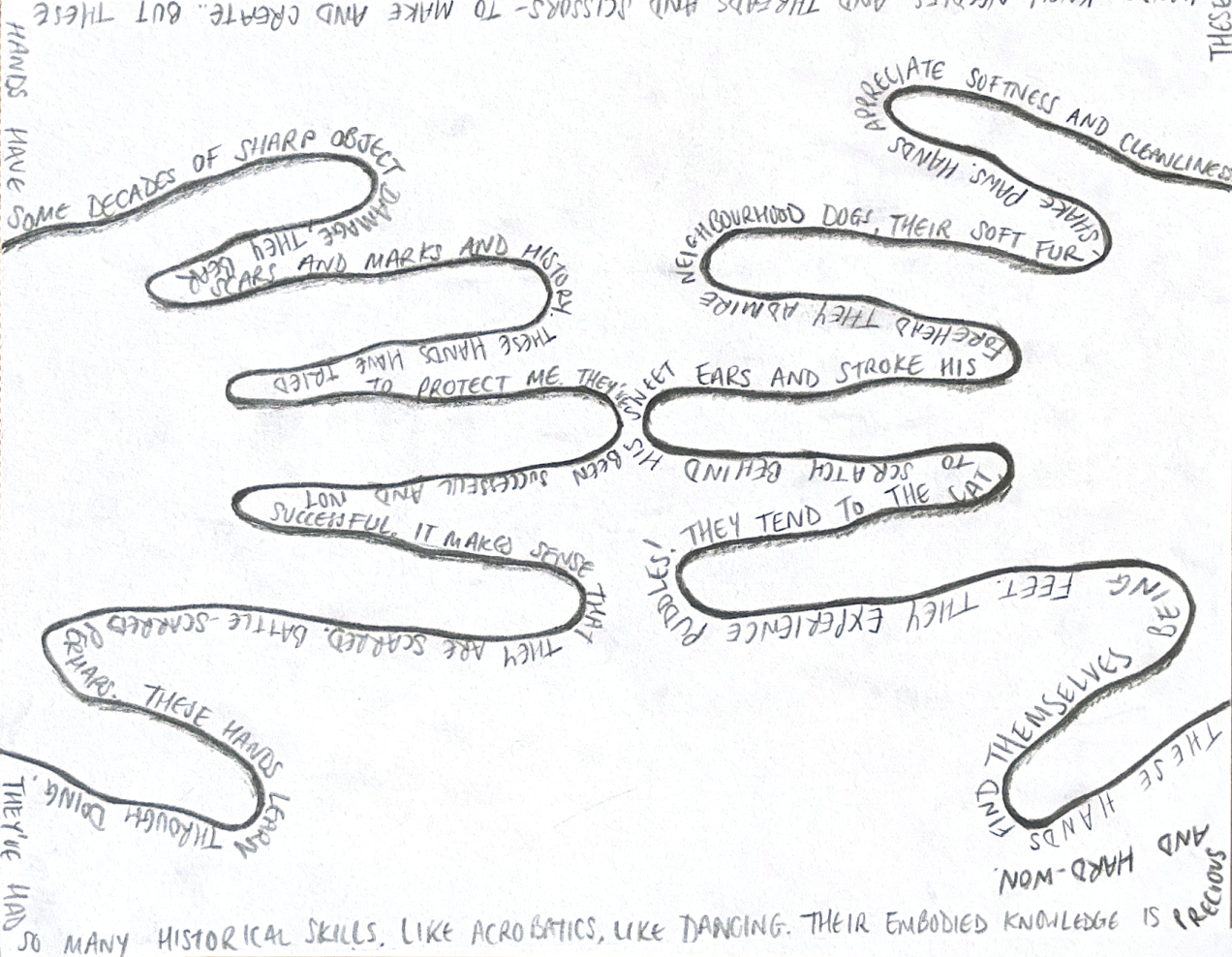
Participants were asked draw to introduce themselves through their hands by tracing their outline and reflecting on what their hands can - and cannot - do.
The second session, held a month later at The Hunterian Museum at the Royal College of Surgeons of England in London, turned to the theme of ‘Pride in Skill’. Through a guided tour of the museum, we were introduced to the ways in which pride shapes not only the practice but also the presentation of skilled labour. Particular attention was given to the meticulous specimen preparations of John Hunter and the pioneering facial reconstructive surgeries undertaken during the First World War – both powerful examples of how technical precision and identity are intertwined with questions of patient care, aesthetic appearance and professional reputation.
This focus on surgical expertise was extended into practice through a suturing exercise led by surgeon Sarah Whitehorn. Demonstrating the fine motor skills involved in suturing, she guided us as we donned surgical gloves and used forceps and needle holders to pass curved needles and thread through synthetic skin, carefully drawing together the edges of a wound. The exercise foregrounded questions about the mediation of touch through instruments, the ways in which care can be embodied in a stitch and how craft can be a lifesaving practice. For one attendee, the experience raised reflections on ‘gendered views of surgery and craft … and how one is more valued than the other’, despite their reliance on similar haptic skills. The session concluded with a return to textile making under Ruth Singer’s guidance. Perhaps influenced by the surgical setting, participants produced sculptures that evoked anatomical forms – brains, limbs, and genitalia – blurring the boundaries between surgical and textile modes of making.
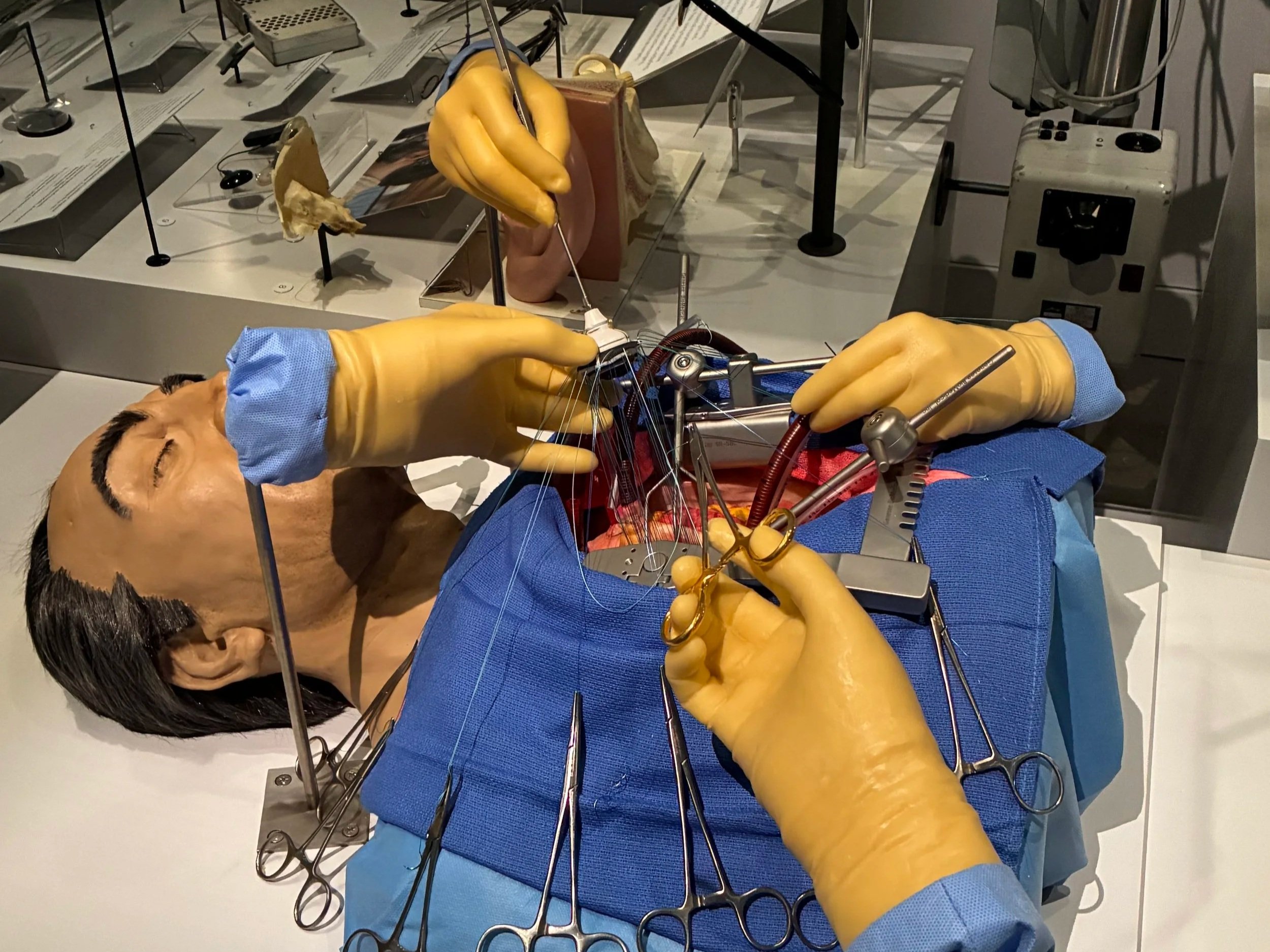
A model in The Hunterian Museum of surgeon’s hands at work. One attendee wrote that the tour made them realise ‘how much hand dexterity and skill are involved in surgery’.
Across both workshops, a consistent theme in participant feedback was a renewed awareness of the hand itself. Many noted that, despite their existing skills, they had rarely considered their hands as central to their sense of identity. One participant reflected that their hands had previously seemed merely ‘functional’ but came to feel ‘more valuable’ through the workshop experience. Another observed that they had ‘never been encouraged to consider my identity through what my hands do … what they say about lived experience’. For others, hands shifted from being ‘just a tool’ to becoming objects of ‘reflection, contemplation … and appreciation’. Taken together, these responses underscore the workshops’ central proposition: that the work of our hands, although often thought of as incidental, is actually foundational to how we understand ourselves and our histories.
The Work of Mending workshop series continues with four more sessions at The Quilters’ Guild and The Hunterian Museum at The Royal College of Surgeons of England across 2026. If you would like to be added to the waitlist for these sessions, please contact victorianhand@fashion.arts.ac.uk.