
23/01/26
Reflections on The Hand: Emotions, Embodiment, Identity
Two weeks on from our conference, The Hand: Emotions, Embodiment, Identity, the Victorian Team hand reflect on our highlights from this 2-day interdisciplinary event.
Helen Victoria Murray:
When we first conceived the conference on The Hand, we wanted to honour the interdisciplinarity of hand research and handwork. We hoped connecting hand-workers from different disciplines might spark creative, generative conversations. I’m happy to say, this was exactly what happened! It was a pleasure throughout the conference to see parallels emerge between fascinating research papers, and organic discussions breaking out between researchers and creators.
I was thrilled to chair our plenary session, Tactile Subjects. The intersection of Victorian studies (Peter J. Capuano), poetry (Sarah Jackson) and photographic arts (Caroline Seymour) are all passions of mine, so to hear from our erudite speakers about their respective approaches to the hand was a highlight. The keynote conversation confirmed our premise for me: the hand, symbolically and actually enables us to reach and connect.
I take away new questions which I’m still pondering. How can we touch without touching? Can touch echo across temporal or ideological boundaries? How do motion and gesture contribute to thinking? How do fashions and technologies of the hand extend our sense of embodiment beyond the flesh? These thoughts invigorate me for our next phase of research, and to embark on an edited collection emerging from our conference. Watch this space!
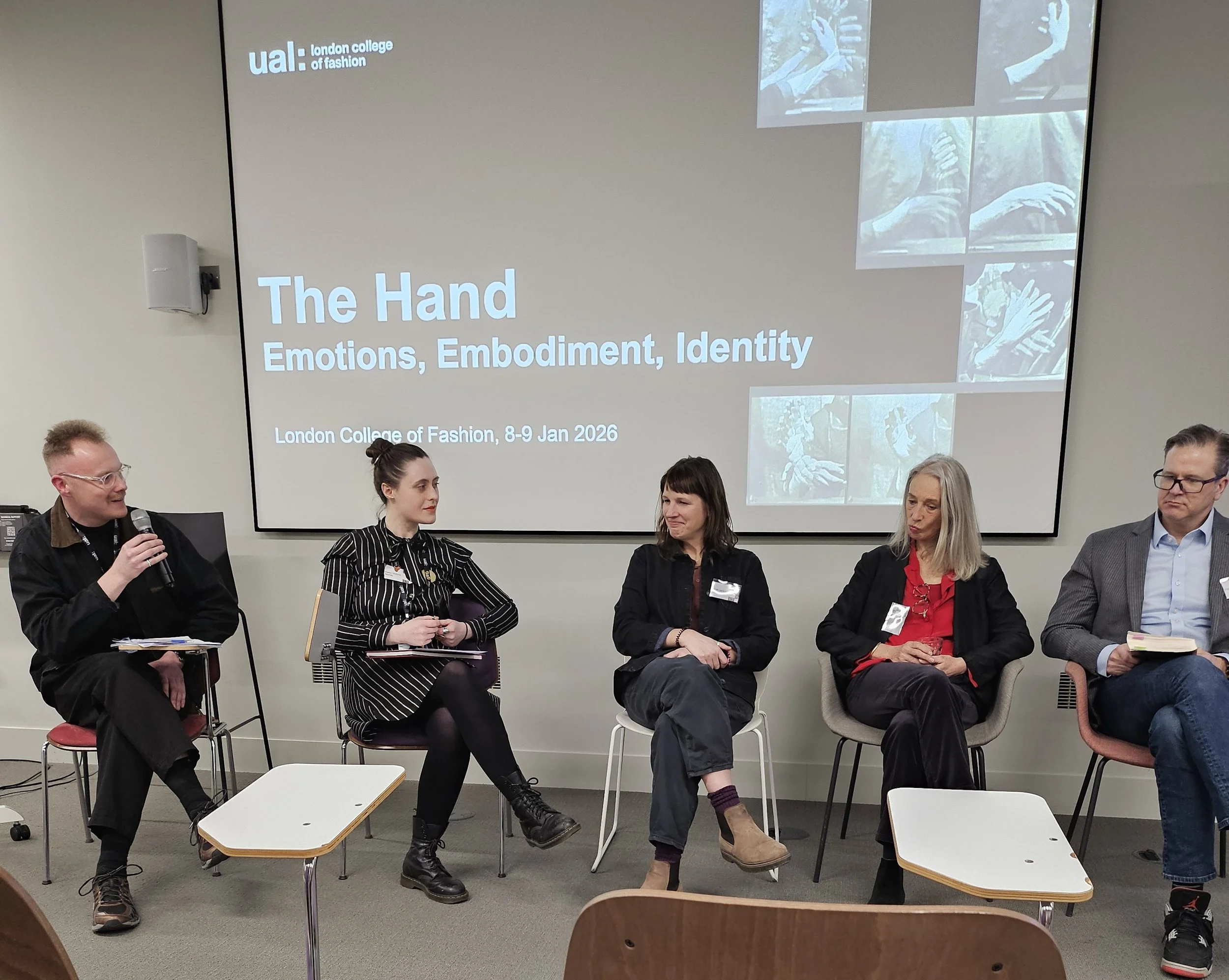
The plenary session, from left to right: Ross Cameron, Helen Victoria Murray, Sarah Jackson, Caroline Seymour and Peter J. Capuano.

Joanne Begiato:
Several days on from our conference, I’ve been left with a number of hand impressions! I have striking images of expert hands making objects from costume props to samplers, and of surgeons’ hands operating, all of them forms of art in one way or another. What struck me particularly about these skilled hands and others is how hands are the catalyst of embodied knowledge, mediators between mind and making, teaching through doing and being. Other hands crowd my mind: babies’ hands, gloved hands, gloves empty of hands but filled with water, slowly dripping, hands touching bodies to cover and objectify them, hands wearing jewellery to whisper, or sometimes shout, identity. These hands made me think of the capacity of hands to bridge time and space, where touching or doing can be imagined spanning distances between people and offering touchpoints to connect, learn, or understand.
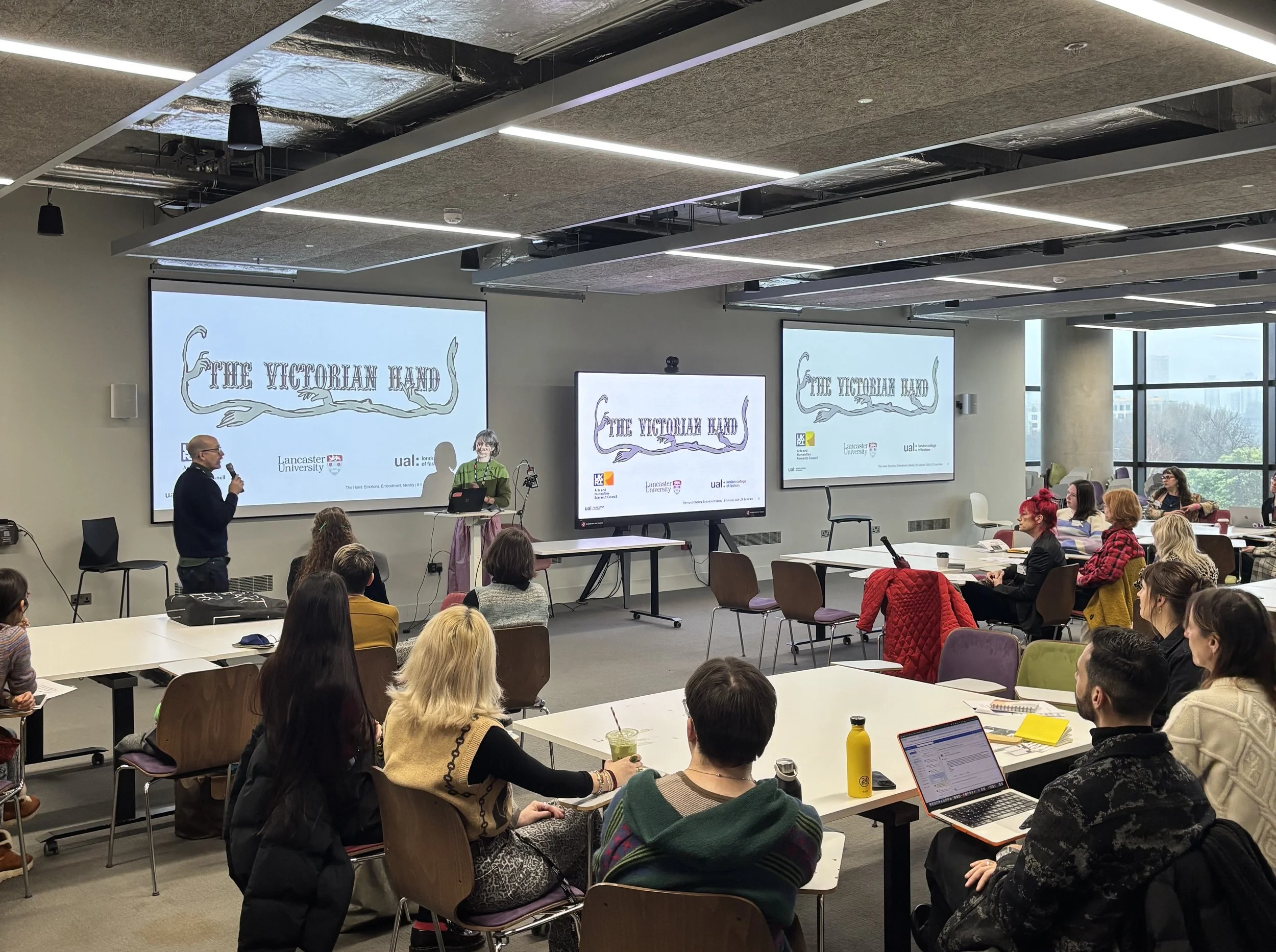
Joanne Begiato and Michael Brown welcoming delegates to the conference.
Michael Brown:
What really stays with me, is how wonderful it was to take two days out in the dull afterglow of Christmas and new year to absorb and contemplate so many intellectually and conceptually stimulating papers, which, taken together, amply demonstrate how hands, with their haptic, sensory, and sensual qualities, as well as their immense symbolic power really capture something ineffable about what it is to be human in so many different times and places. It even got me thinking that there is great potential in the concept of ‘hand studies’, which would reach across disciplinary boundaries and draw together the various strands of research that I was fortunate to catch a glimpse of into a collective exploration of this uniquely resonant expression of human embodiment and agency.
Over those two oddly cosy, damp grey days in the stark majesty of a near-empty LCF East Bank I was taken from criminal hands to healing hands, from the ambiguities of domestic craft to the concept of haptic travel, and from the politics of touch to its erotics. What seemed at first like it might have been an exciting but disparate programme actually cohered into a remarkably synergistic experience with so many intriguing connections between different papers. And yet I am conscious that I was only able to attend just over half of the sessions, seeing as we had parallel panels in operation. In essence I saw a different conference from some of my colleagues and I would relish the opportunity to hear about the research of those whose papers I was not able to attend, as well as be able to communicate my enthusiasm for what I did hear to others who were not there. I guess what I am saying is that I would like to do it all over again, but I am not sure that those who undertook the bulk of responsibly for organizing everything would thank me. In any case, I hope that the edited collection that comes out of the conference will serve to capture some of that buzz that kept us all warm in early January.
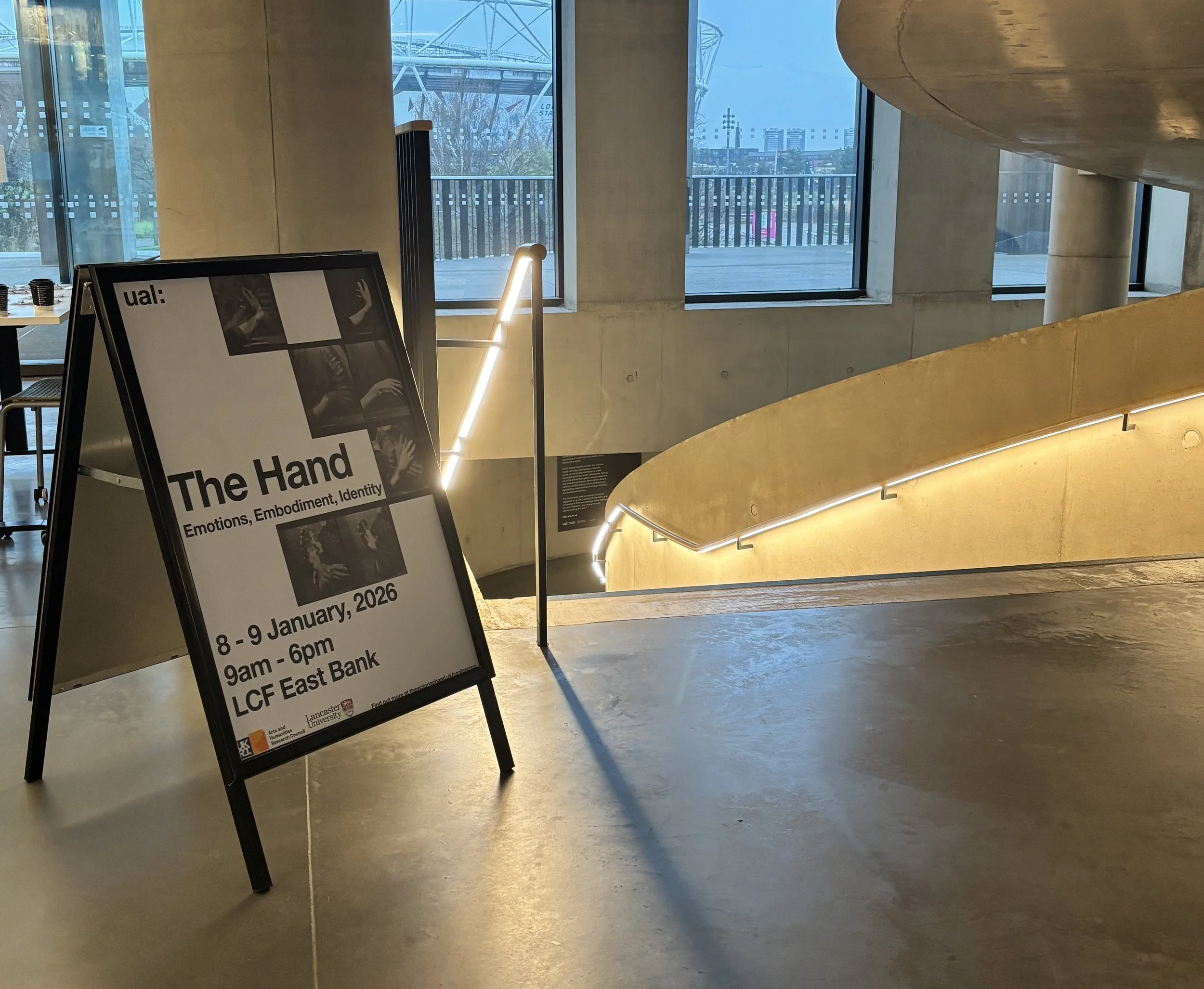
The intellectually stimulating glow of LCF in early January.
Ross Cameron:
After more than a year away from academic conferences, joining The Hand conference organising team was a genuinely energising return. From the outset, the event offered much of what I had been missing: stimulating papers, generous conversations with like-minded researchers and opportunities to reflect on how others’ work intersects with my own research on travel writing and the senses.
Unsurprisingly, it was hands that lingered most in my mind. Papers invited us to consider the hands of visually impaired Victorians tracing the outlines of tactile alphabets; the severed hands of Egyptian mummies that came to symbolise resistance to colonial rule; and the carefully posed hand gestures in fashion magazines that embodied the mobility and glamour of the jet age. The diverse examples of hands discussed at the conference demonstrated the hand’s remarkable capacity to communicate meaning across time, space and media.
The conference also stood out for its workshop programme, which encouraged participants to reflect on the embodied skills of their own hands. These hands-on sessions offered a departure from the standard panel format, inviting attendees to think with their hands through textiles, clay and articulated models. These tactile encounters deepened the conference’s themes and left me particularly excited for The Victorian Hand’s forthcoming workshop series at The Quilters’ Guild of the British Isles in York and the Royal College of Surgeons of England in London. If you would like to get involved, more information about our upcoming workshops can be found here.
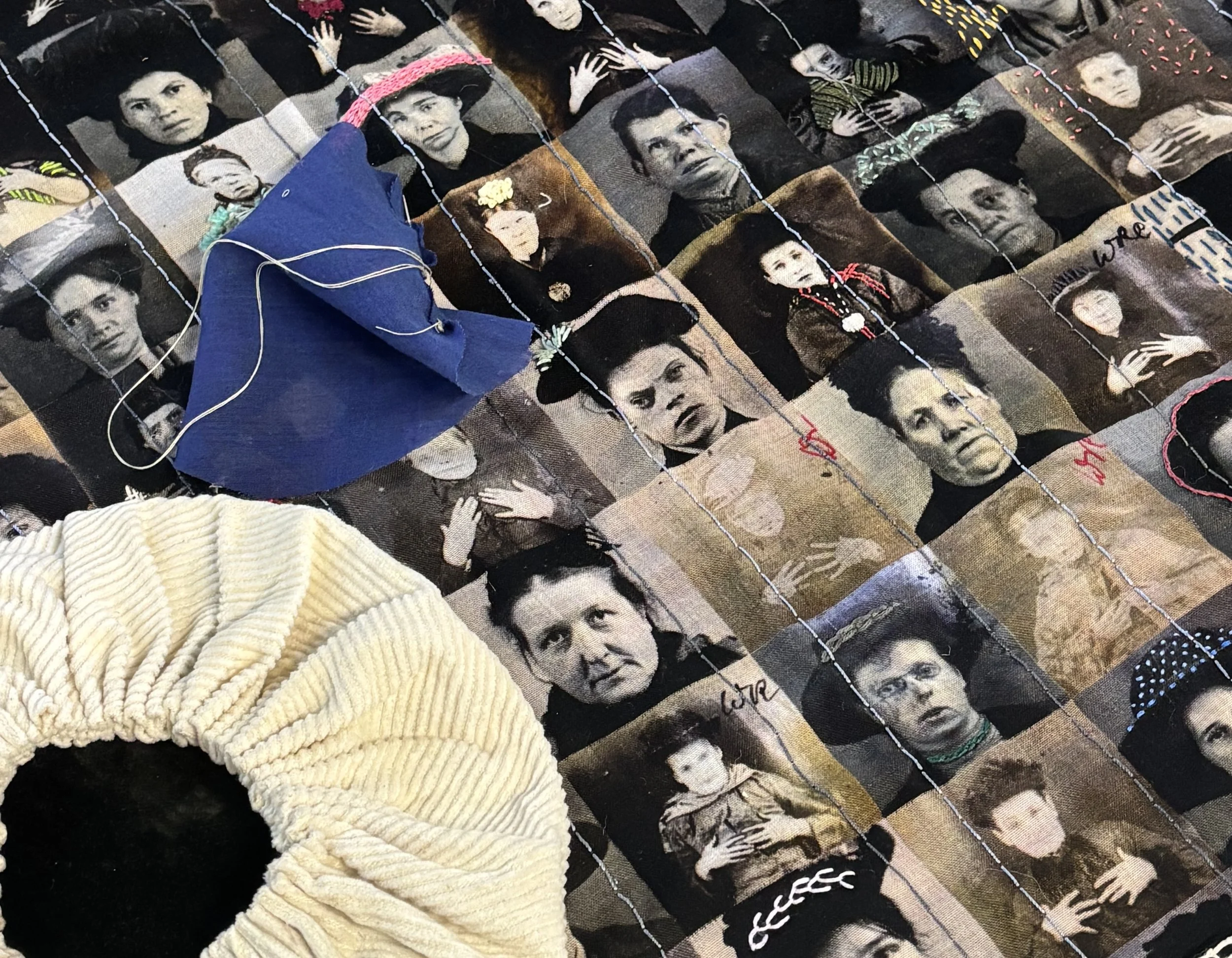
Textile materials from artist Ruth Singer’s workshop, including a quilt from her Criminal Quilts project.